Describe the Five Factor Model of Personality
They found that all the findings indicate a set of five-factors. People who are conscientious are more aware of their actions and the consequences of their behavior.

The Five Factor Model Of Personality Download Scientific Diagram
Five-Factor Model of Personality History of Five-Factor Model.
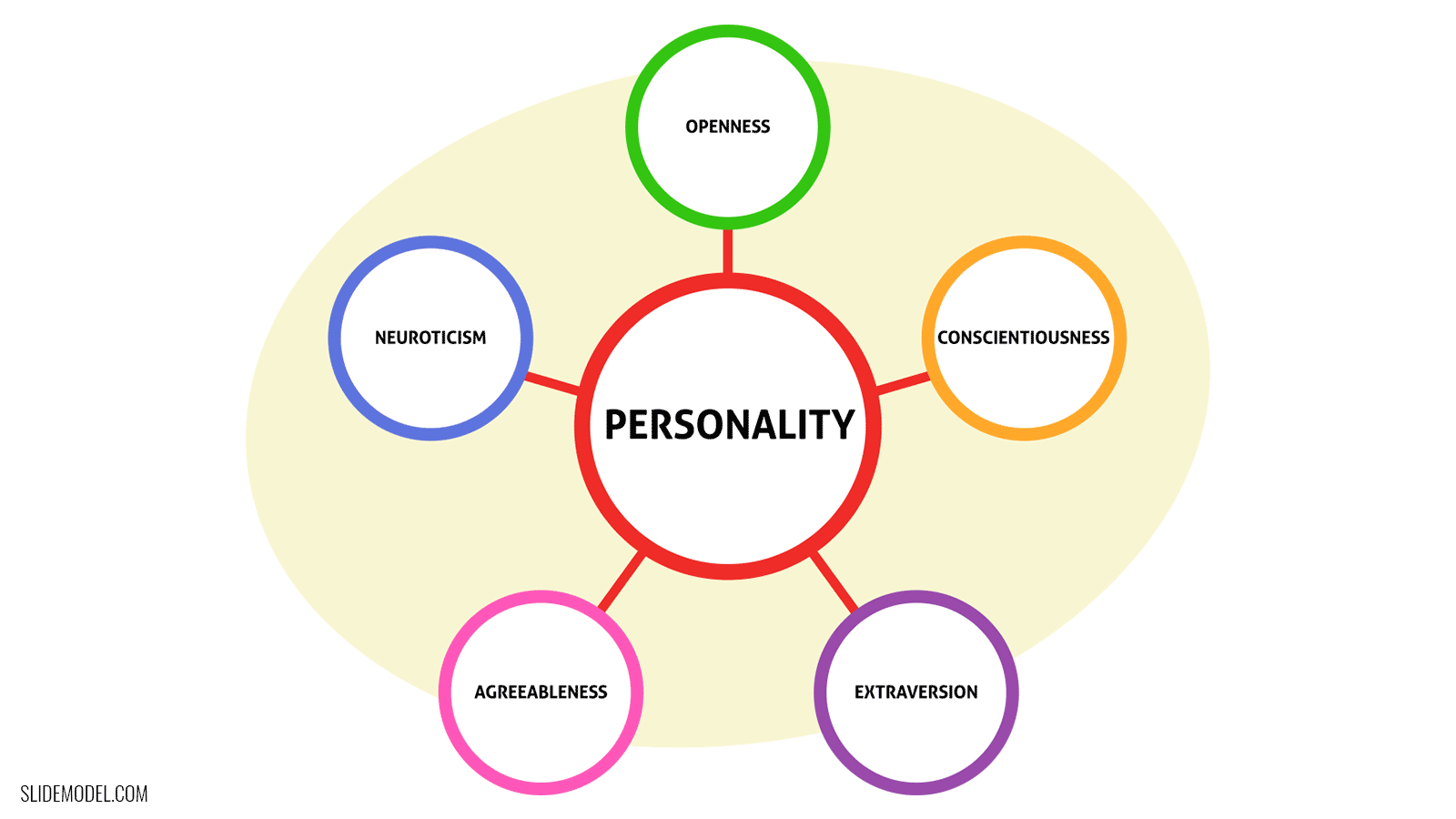
. These five factors also referred to as dimensions of personality are. This theory was developed independently by different theorists however Paul Costas and Robert McCraes version of the five-factor model is well-known today through the acronym OCEAN and is discussed by most psychologists when referred to the. This model is not based on scientific experiments.
Although some psychologist may not agree with the theorys 5 factors the characteristics they identify with do maintain a strong support. Extraversion Agreeableness Conscientiousness Neuroticism. Click card to see definition.
By requiring said individual to answer a series of questions this test is able to decipher the traits that are most likely evident within their life. The Five-Factor Model of Personality test gives the test subject a series of situational options. Extraversion Agreeableness Conscientiousness Neuroticism and Openness to Experience.
These factors are described below. Five-factor model of personality in psychology a model of an individuals personality that divides it into five traits. The origins of the FFM can be traced to William McDougalls proposal in 1932 that.
The Five Factor Model FFM of general personality structure consists of the five broad domains of neuroticism or emotional instability vs. Extraversion E Agreeableness A Conscientiousness C Neuroticism N and Openness to Experience O. The traits that constitute the five-factor model are extraversion neuroticism openness to experience agreeableness and.
The Big Five personality traits also known as the five factor model is a model based on common language descriptors of personality. The theory that I chose to define my personality is the five-factor model of personality. The Big Five personality traits are extraversion also often spelled extroversion agreeableness openness conscientiousness and neuroticism.
Describe humanistic theories of personality and self-esteem trait theories including the five-factor model of personality and social-cognitive theories of personality. Many contemporary personality psychologists believe that there are five basic dimensions of personality often referred to as the Big 5 personality traits. A distinguishing feature of the Five Factor model is that it is dimensional.
The five-factor model of personality FFM is a set of five broad trait dimensions or domains often referred to as the Big Five. The five-factor model of personality is a hierarchical organization of personality traits in terms of five basic dimensions. In this exercise you will identify the different personality traits and research methods by working with the Myers-Briggs Type Indicator MBTI.
This means that you can have more or less of these five traits and that the most common case is for people to be somewhere in the middle. The Big Five remain relatively stable throughout most of ones lifetime. Introversion openness or unconventionality agreeableness vs.
All in all the Five Factor Model is widely considered the most valid and evidence-based model of personality. The Five-Factor Model of Personality is a system used in order to describe an individuals personality traits. The openness to experience dimension of personality is characterised by a willingness to try new.
The results of repeated independent studies have yielded interpretations. The claim of five factor theorists is that behaviour can be bestpredicted and explained by measurement of five dominant personality factors. Therefore the present study investigated the five personality domains of Neuroticism Extraversion Openness Agreeableness and Conscientiousness as measured by the NEO Five Factor Inventory NEO-FFI in a sample of 93 adults seeking speech treatment for.
Explain how psychologists apply observations. Five-Factor Model Description and Measurement. They are often called Big Five.
Extraversion Agreeableness Conscientiousness Neuroticism sometimes named by its polar opposite Emotional Stability and. Those who store high on this factor are imaginative curious open to new ideas and interested in cultural pursuits. Five factor theorists are one set of traittheorists.
Fiske 1949 and later expanded upon by other researchers including Norman 1967 Smith 1967 Goldberg 1981 and McCrae Costa 1987. Each trait represents a continuum. Antagonism and conscientiousness or constraint vs.
Paul Costa and Robert MacCrae have done extensive research on all the possible personality traits. Previous research has not explored the Five Factor Model of personality among adults who stutter. Individuals can fall anywhere on the continuum for each trait.
The five broad personality traits described by the theory are extraversion also often spelled extroversion agreeableness openness conscientiousness and neuroticism. Five Factors at a Glance Openness to Experience. The five-factor model of personality FFM is a set of five broad trait dimensions or domains often referred to as the Big Five.
EysenckTellegans superfactors why they did not stick. These descriptors are grouped together using a statistical technique called factor analysis ie. Thefive factor theory is a fairly recent proposal and has its basis in earlier workwhich shall be discussed.
Evidence of this theory has been growing over the past 50 years beginning with the research of D. Today many researchers believe that they are five core personality traits. The big five are broad categories of personality traits.
Personality traits are understood as patterns of thought feeling and behaviour that are relatively enduring across an individuals life span. Tap card to see definition.
The Big Five Personality Traits Model Slidemodel

Five Traits To Rule Them All The Big Five Personality Test Also By Natalie Sweeney Psyc 406 2016 Medium
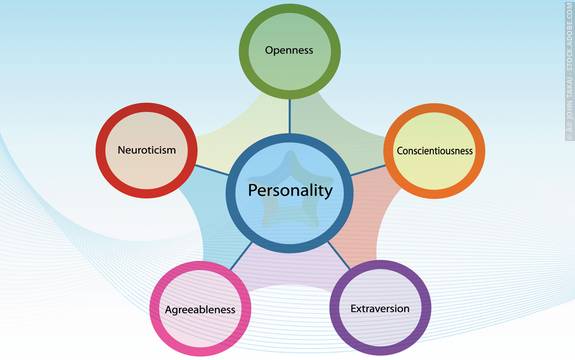
Five Factor Model Of Personality Psychologist World


Comments
Post a Comment